
 When you first step into the world of trading and investing, one of the biggest questions you face is:
Should I trade Forex or stocks?
This is not a “better or worse” situation—it’s about understanding how each market works and which one suits your personality, lifestyle, and goals.
Let’s dive in and compare them in simple, real-world terms.
When you first step into the world of trading and investing, one of the biggest questions you face is:
Should I trade Forex or stocks?
This is not a “better or worse” situation—it’s about understanding how each market works and which one suits your personality, lifestyle, and goals.
Let’s dive in and compare them in simple, real-world terms.
What Are We Really Trading?
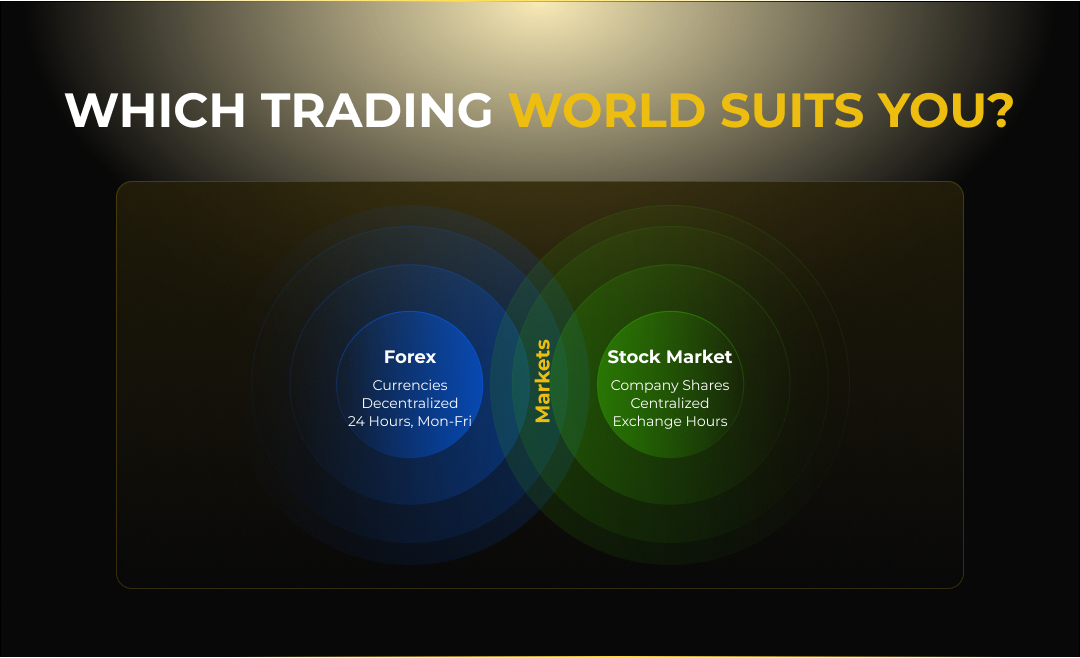
Forex – The Currency Game
Forex, or the Foreign Exchange market, is where people exchange one currency for another. Example: If you’ve ever travelled abroad and converted your Indian Rupees to US Dollars or Euros, you’ve participated in Forex!- In trading terms, you’re buying one currency while selling another at the same time. For example, when trading EUR/USD, you’re buying euros and selling US dollars.
- It’s the largest financial market in the world with a daily volume of over $7 trillion. Yes, trillion with a “T”.
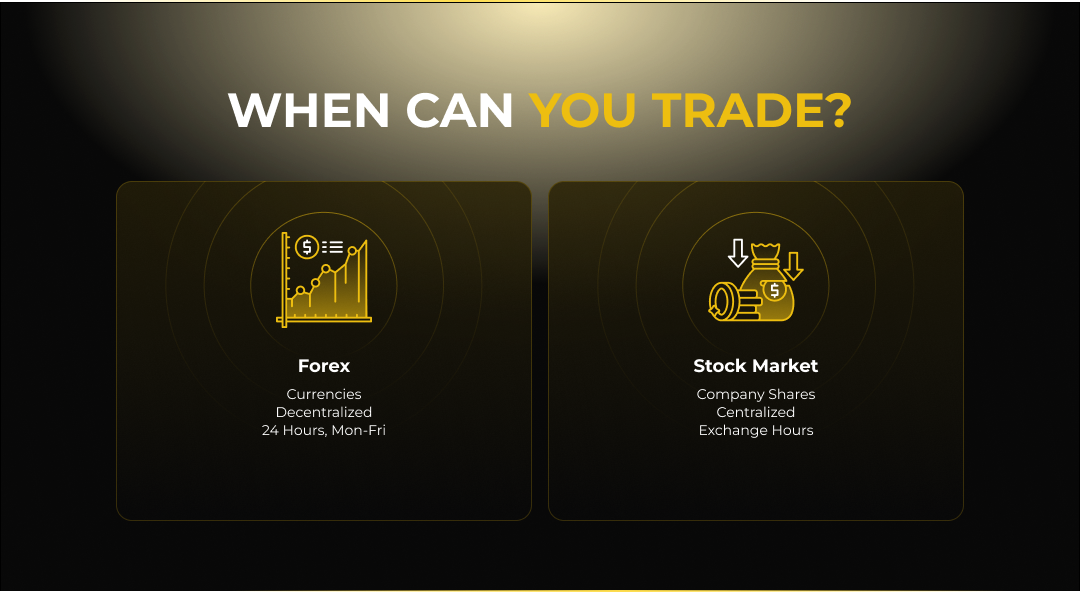
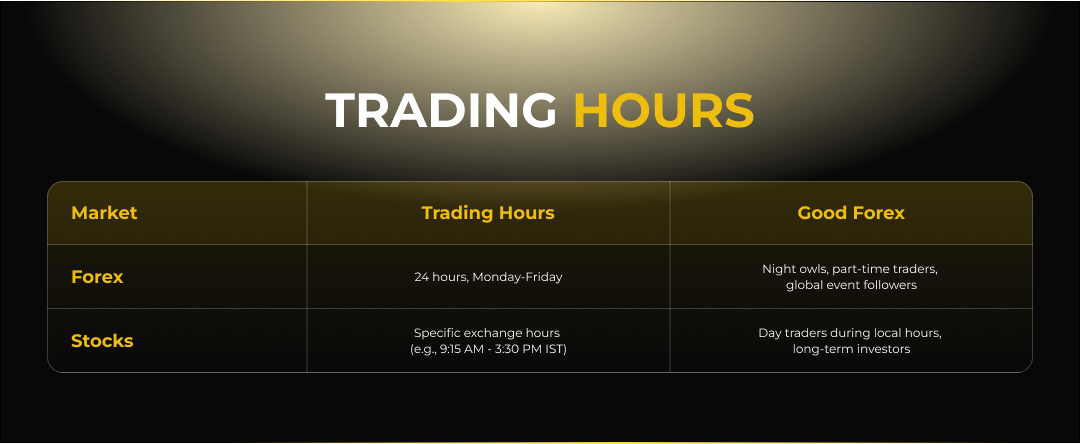
- Unlike the stock market, there’s no central exchange. It’s decentralized and runs 24 hours a day, Monday through Friday.
Stock Market – Owning Pieces of Companies
The stock market is where you buy shares of companies. When you buy a share of Apple, TCS, or Infosys, you’re buying partial ownership in that company.- Stocks are traded on centralized exchanges like NSE/BSE in India or NYSE/NASDAQ in the US, for example
- You make money when the company performs well, its stock price rises, or it pays dividends.
Volatility & Liquidity: The Movement and the Money
- Forex is highly liquid – especially major pairs like EUR/USD or USD/JPY. This means you can enter and exit trades quickly without slippage (the price moving before your order is filled).
- Stocks are less liquid, especially in smaller companies. Some stocks may barely move in a day, while others can surge or plunge on news.
- In Forex, pairs can move 100+ pips a day, and on some days even a few hundred pips. A skilled trader can profit—or lose—fast, yes – FAST!
- Stocks can be more stable, but events like earnings reports can cause massive gaps in price.
Leverage and Risk: The Double-Edged Sword
Forex: High Leverage = High Risk- Brokers may offer 50:1 or 100:1 leverage—meaning with just $100, you can control a $10,000 position.
- This can grow your profits fast—but it also means one bad move can wipe you out just as fast.
Stocks: Lower Leverage = Slower Burn
- Stock trading (especially in India) offers limited leverage. You usually need to put up more of your own capital.
- This makes it safer for beginners but also means slower growth unless the stock makes a big move.
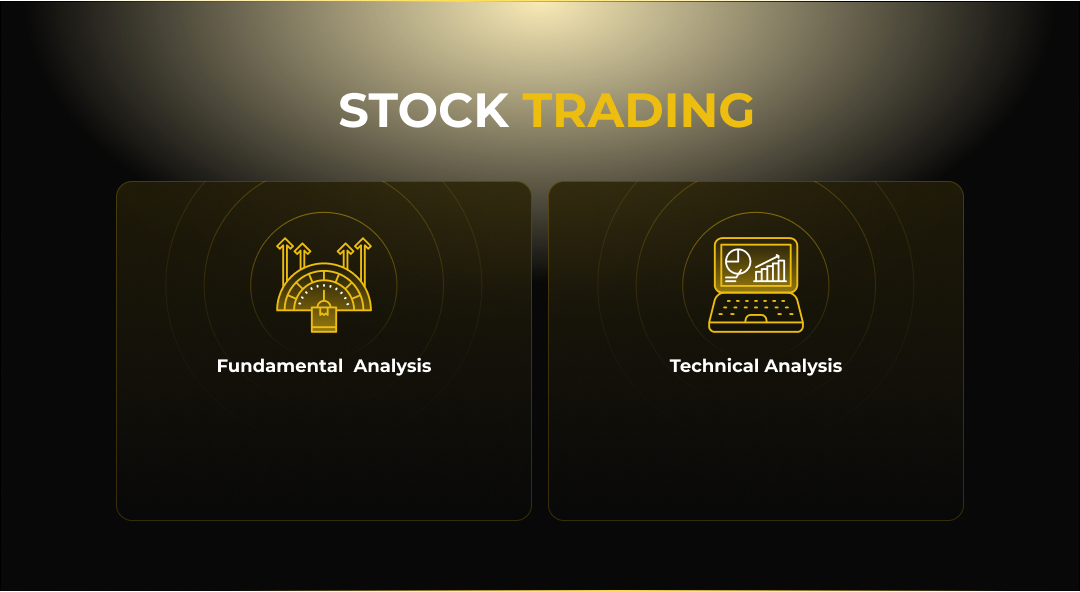
- Technical analysis: Charts, indicators, trends, patterns, cycles.
- Economic news: Interest rates, inflation, central bank announcements (like the Fed or RBI).
- Short-term trades: Scalping, day trading, swing trading.
Stock Traders Focus mostly on…
- Fundamental analysis: Company performance, revenue, profits, balance sheets.
- News & events: Product launches, earnings reports, mergers.
- Medium to long-term trades: Investing for months or years.
Psychology & Personality Fit
| If you’re… | You might prefer… |
| A fast thinker, like excitement, react quickly | Forex |
| A planner, prefer research, want steady growth | Stocks |
| Love global events, macroeconomics | Forex |
| Love following brands and industries | Stocks |
Which One is More Profitable?
Both markets offer massive opportunities. But here’s the key difference:- Forex rewards speed, discipline, and technical mastery.
- Stock trading rewards patience, research, and strong fundamentals.
Quick Pros and Cons
Forex
Pros:- 24/5 market access
- High liquidity
- Lower capital requirement to start
- Great for technical trading
- High leverage = high risk
- Very sensitive to news
- Can be overwhelming for beginners
Stocks
Pros:- Lower risk
- Regulated environment
- Long-term growth potential
- Easier to understand for beginners
- Limited trading hours
- Requires more capital for decent gains
- Can be slow-moving
Final Thoughts: Which Should You Choose?
The truth? You don’t have to choose only one. Many successful traders diversify—trading Forex during active hours and investing in stocks for long-term goals. If you’re still unsure, ask yourself:- Do I enjoy fast-paced decision making? → Try Forex.
- Do I like digging into business fundamentals? → Go with stocks.