
When you start your trading journey, it’s easy to get dazzled by flashy broker ads: “Tightest spreads! No fees! Huge bonuses!” In practice, your broker does more than provide access—they act as the link that connects you directly to the trading market.
Choose the wrong broker, and your trading journey may feel like sailing with holes in your boat. Choose wisely, and you’ll sail smoothly with confidence.
Here’s your step-by-step guide to making sure your broker is trustworthy, professional, and aligned with your goals.
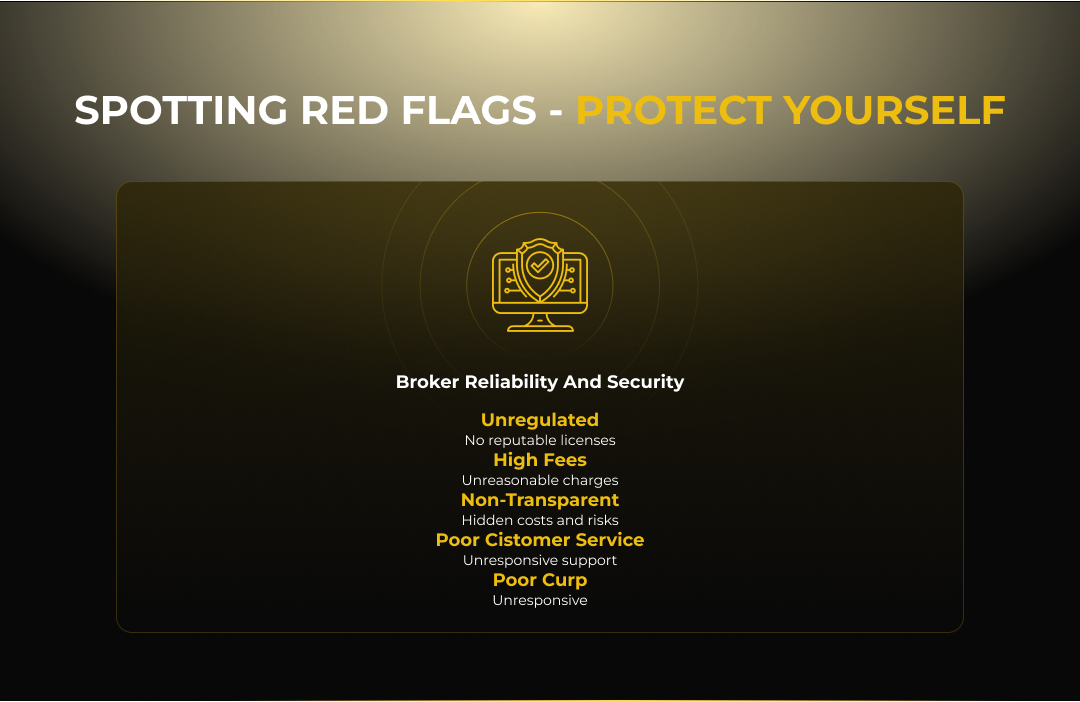 Here are warning signs of unreliable brokers:
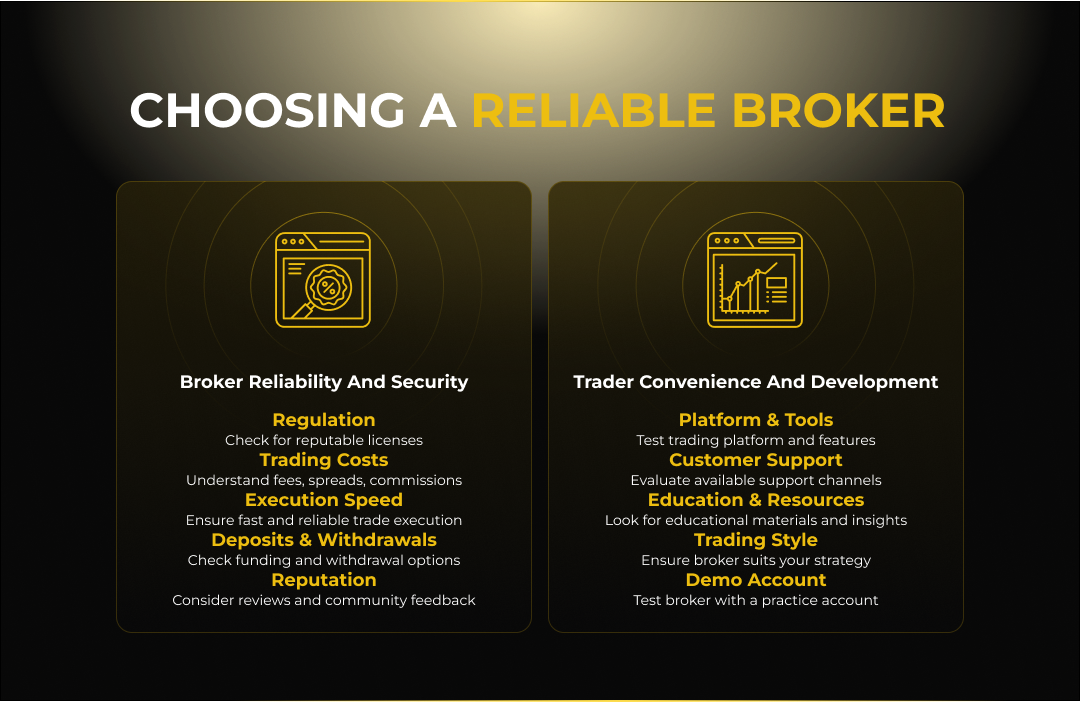
1. Regulation – The Foundation of Trust
Think of regulation like a seatbelt in your car—it won’t stop you from crashing, but it will save you when things go wrong.- What it means: A regulated broker operates under strict financial authorities. This ensures transparency, minimum capital reserves, and separation of client funds from company money.
- Examples of top regulators:
- FCA (UK) – (United Kingdom) Financial Conduct Authority
- ASIC (Australia) – Australian Securities and Investments Commission
- CySEC (Cyprus) – Cyprus Securities and Exchange Commission
- NFA/CFTC (USA) – National Futures Association & Commodity Futures Trading Commission
- BaFin (Germany)
2. Trading Costs – The Hidden Leak in Your Profits
Trading isn’t free, and fees differ widely between brokers.- Spreads: This is the difference between the price you can buy a currency (ask) and the price you can sell it (bid).
- Commissions: Some brokers charge a fixed cost per trade (common with ECN accounts).
- Other costs: Inactivity fees, withdrawal fees, currency conversion charges.
- Broker A: 0.6 pip spread, no commission.
- Broker B: 0.0 pip spread, $7 commission per lot.
3. Platform & Technology – Your Trading Cockpit
Your platform is your main trading weapon.- Common platforms:
- MetaTrader 4 (MT4): Classic, simple, highly popular.
- MetaTrader 5 (MT5): More tools, more order types, multi-asset.
- cTrader: Great for ECN trading with advanced depth-of-market view.
- Broker’s own platforms: Some offer custom-built apps—sometimes excellent, sometimes clunky.
- Is the platform stable?
- Does it freeze during news events?
- Are charts customizable?
- Can you place stop-loss and take-profit easily?
4. Execution Speed & Reliability – Every Millisecond Counts
Fast and clean execution means you get the price you clicked, not a worse one a second later.- Market Maker brokers may sometimes re-quote prices.
- ECN/STP brokers usually pass orders directly to liquidity providers.
5. Deposits & Withdrawals – Smooth Money Flow
Your broker shouldn’t treat your money like a hostage.- Good signs: Quick deposits, easy withdrawals, multiple payment options (bank transfer, cards, e-wallets).
- Red flags: Withdrawal delays, excuses like “compliance issues” without clear explanation, hidden fees.
6. Customer Support – Your Lifeline in Stressful Moments
When markets move fast and problems arise, support can make or break your trading day.- Good brokers: 24/5 (or even 24/7) multilingual support via live chat, phone, and email.
- Bad brokers: Only email support, replies after 2–3 days, or canned copy-paste answers.
7. Education & Research – More Than Just Trading Access
A great broker doesn’t just execute trades—they help you grow as a trader.- Webinars, eBooks, tutorials.
- Daily market analysis.
- Trading tools like economic calendars and sentiment trackers.
8. Reputation – What Other Traders Say
Traders talk, and their experiences reveal a lot.- Check independent forums (e.g., ForexPeaceArmy, Reddit).
- Look for recurring issues like withdrawal delays or slippage.
- Be cautious of overly positive reviews—they may be fake.
9. Match Broker to Your Trading Style
Not all brokers suit all traders.- Scalpers: Need low spreads, fast execution, ECN/STP accounts.
- Swing traders: Can work with slightly wider spreads, but prefer reliability and lower swaps.
- Beginners: Need strong education, good support, and an easy platform.
10. Demo Account – Your Test Drive
A demo account is like a free test drive before buying a car.- Test execution speed.
- Check platform stability.
- Simulate your real strategy.
Here are warning signs of unreliable brokers:
- Promises of guaranteed profits.
- Extremely high leverage with no risk warnings.
- Aggressive sales calls pushing you to deposit more.
- Withdrawal delays with endless excuses.
- Unregulated or only regulated in weak offshore jurisdictions.
Final Thoughts
Choosing a broker is one of the most important decisions in your trading career. Don’t rush it. Take time to:- Verify regulation
- Understand costs
- Test platforms
- Check execution & support
- Read reviews
- Match to your trading style