Bid, Ask, Spreads & Pips – The Essential Forex Trio You Must Master
When I first dipped my toes into the Forex waters, I thought trading was as simple as clicking buy when I thought the market would go up and sell when I thought it would go down.
Then I saw two prices for every currency pair, noticed my trades started in the red even when I was “right,” and kept hearing traders talk about “pips” like it was some secret language.
It took me a while to realize that Bid, Ask, Spread, and Pips aren’t just technical terms—they are the foundation of every single Forex trade. If you misunderstand them, you’ll struggle to make consistent profits, no matter how good your strategy is.
So, let’s break them down — not with textbook jargon, but in plain, trader-to-trader language.
The Bid Price – Where Buyers Are Waiting
In trading, the Bid is the price the market (or your broker) is willing to buy a currency pair from you.
Think of it like selling something at a pawn shop: the shop offers you a price, and if you agree, the deal happens. You don’t get to name your price—the buyer sets it. In Forex, that “buyer” is effectively your broker’s liquidity provider.
Key Points to Remember:
- The bid price is always the lower of the two numbers you see quoted.
- When you sell a currency pair, your trade is executed at the bid price.
Example:
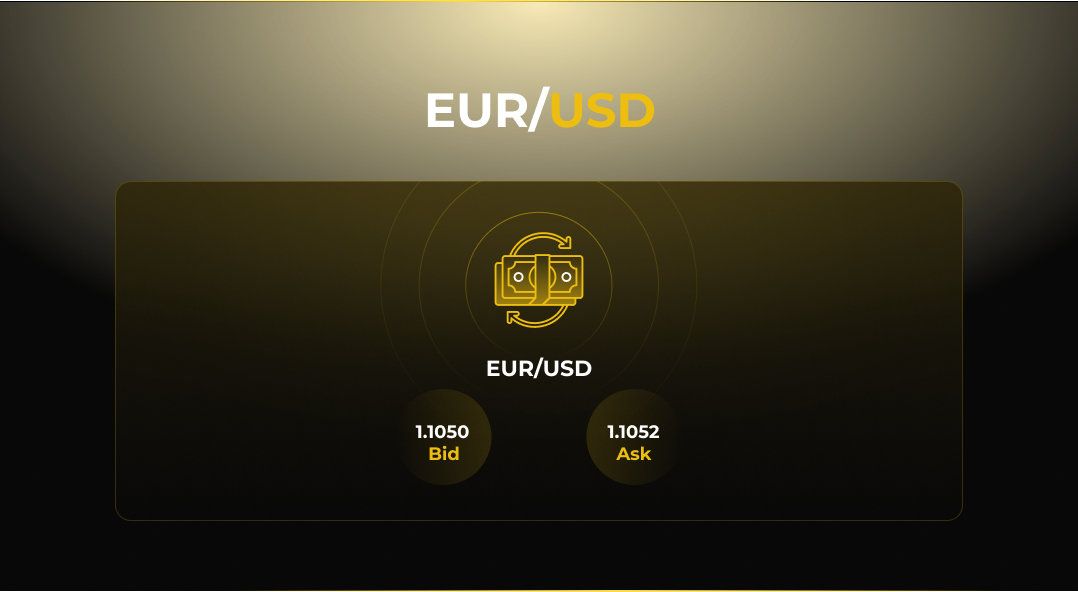
EUR/USD = 1.1050 / 1.1052
- If you sell EUR/USD, you’ll receive 1.1050 USD for every 1 EUR you sell.
Pro tip: Always double-check the bid when planning to sell—it’s the price that actually matters to your execution.
The Ask Price – Where Sellers Are Offering
The Ask price (also called the “offer”) is what the market is willing to sell the currency pair to you for.
Imagine walking into a store: the seller already has a price tag on the item. If you want it, you pay that price—no negotiations. That’s the Ask price in Forex.
Key Points to Remember:
- The ask price is always higher than the bid price.
- When you buy a currency pair, your trade is executed at the ask price.
Example:
EUR/USD = 1.1050 / 1.1052
- If you buy EUR/USD, you’ll pay 1.1052 USD for every 1 EUR you buy.
This is why traders sometimes feel they “paid a bit extra” — the ask price includes the spread cost.
The Spread – The Broker’s Silent Commission
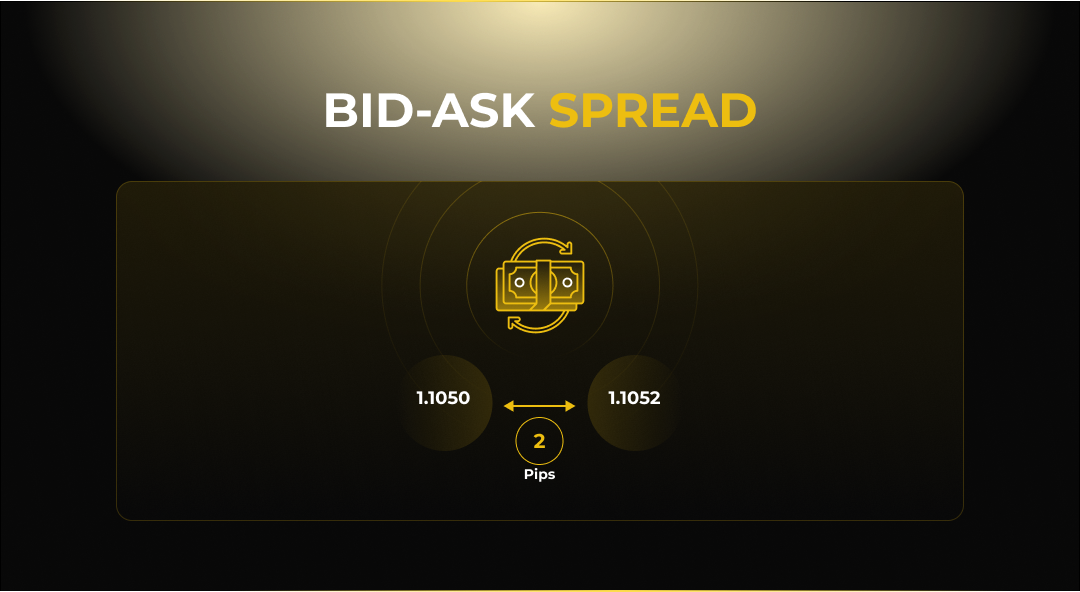
The spread refers to the gap between the buying price (bid) and the selling price (ask) of a currency pair. It’s the broker’s built-in transaction fee. You don’t see it deducted like a bank fee—it’s just in the pricing.
Example with our quote:
Bid = 1.1050
Ask = 1.1052
Spread = 1.1052 – 1.1050 = 0.0002 → which equals 2 pips.
Why It’s Important:
- Every trade starts at a small loss. If the spread is 2 pips, you need the market to move at least 2 pips in your favor just to break even.
- Spreads vary depending on the currency pair, time of day, and market volatility.
- Tighter spreads generally mean lower costs, which is why many traders prefer major currency pairs.
Watch out: During high-impact news releases, spreads can widen drastically—sometimes 5x or 10x the usual amount.
Pips – The Currency of Price Movement
 A pip, short for “point in percentage,” represents the tiniest standard increment of price movement in most forex pairs.
It’s like the “inch” in Forex measurement—you’ll use it to calculate profits, losses, and spreads.
How It Works:
A pip, short for “point in percentage,” represents the tiniest standard increment of price movement in most forex pairs.
It’s like the “inch” in Forex measurement—you’ll use it to calculate profits, losses, and spreads.
How It Works:
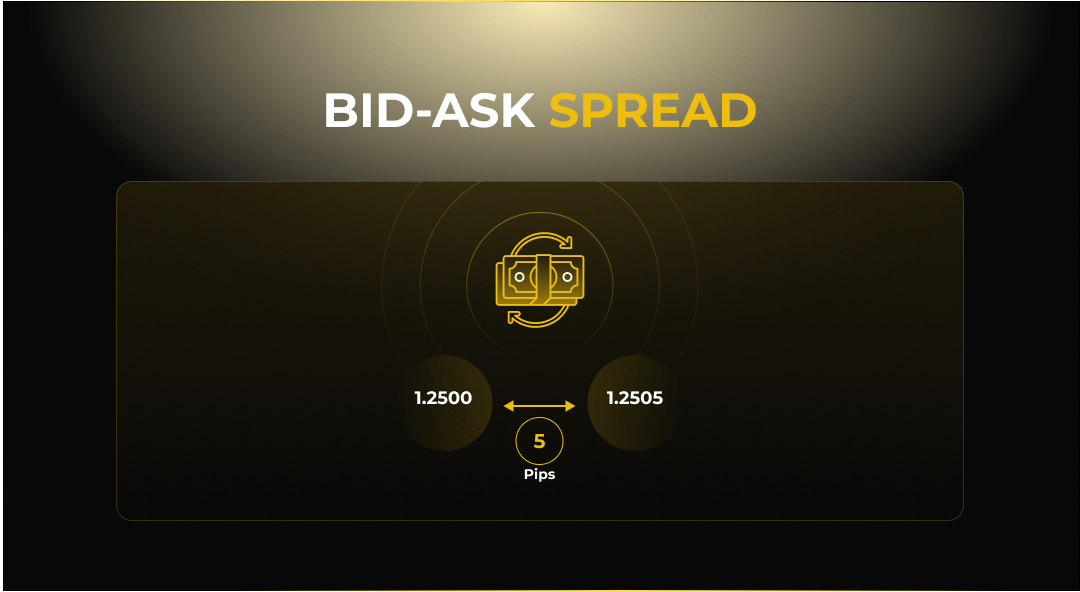
- For most currency pairs: 1 pip = 0.0001 (fourth decimal place)
e.g., EUR/USD moves from 1.1050 to 1.1051 → that’s 1 pip.
- For Yen pairs (USD/JPY, EUR/JPY, etc.): 1 pip = 0.01 (second decimal place)
e.g., USD/JPY moves from 110.50 to 110.51 → that’s 1 pip.
Some brokers even quote fractional pips (pipettes) for more precision, where 1 pipette = 0.1 of a pip.
Why These Four Elements Matter in Real Trading
Understanding bid, ask, spread, and pips is not just about knowing definitions—it’s about using them to your advantage:
- Risk Management – Knowing pip value helps you size positions correctly.
- Trade Timing – Recognizing when spreads widen (news events, low liquidity hours) can save you from entering bad trades.
- Profit Calculations – Your stop loss, take profit, and breakeven levels are all measured in pips.
Cost Awareness – Lower spreads = cheaper trades, which means more room for profits.
 Over the years, I’ve seen beginners fall into the same traps:
Mistake #1 – Ignoring Spread Costs
A scalper making 20 trades a day with a 3-pip spread is paying 60 pips in costs daily—without realizing it.
Solution: Choose low-spread pairs and trade during active market hours.
Mistake #2 – Confusing Bid and Ask Execution
Buying when you meant to sell—or vice versa—because you didn’t pay attention to which price applied.
Solution: Always check the small print on your platform: “Buying at Ask” and “Selling at Bid.”
Mistake #3 – Misjudging Pip Value
Risking more than intended because you didn’t calculate the pip value for the lot size and currency pair.
Solution: Always know how much money 1 pip is worth in your account currency before opening a trade.
Quick Reference Table
| Term |
What It Means |
When It’s Used |
Example (EUR/USD 1.1050 / 1.1052) |
| Bid |
Price you sell at |
Executing a sell order |
1.1050 |
| Ask |
Price you buy at |
Executing a buy order |
1.1052 |
| Spread |
Difference between bid & ask |
Trading cost |
0.0002 (2 pips) |
| Pip |
Smallest price unit |
Measuring movement |
0.0001 for EUR/USD |
Final Thoughts
Think of Bid, Ask, Spread, and Pips like the basic grammar of a language.
Before you can write poetry (profitable trades), you have to know the alphabet and sentence structure.
Every time you open your platform, these four elements are there, shaping your entry, your cost, and your outcome. Master them now, and the rest of your trading journey will feel a lot smoother.